Updated
A loader rental quote is useful only when it names the machine and attachment that can be supplied for your job. Start with the material, site and dates. Then ask each provider for the same written scope, including handover and return. A John Deere badge or a daily rate alone cannot settle the choice.
Name the machine you actually need
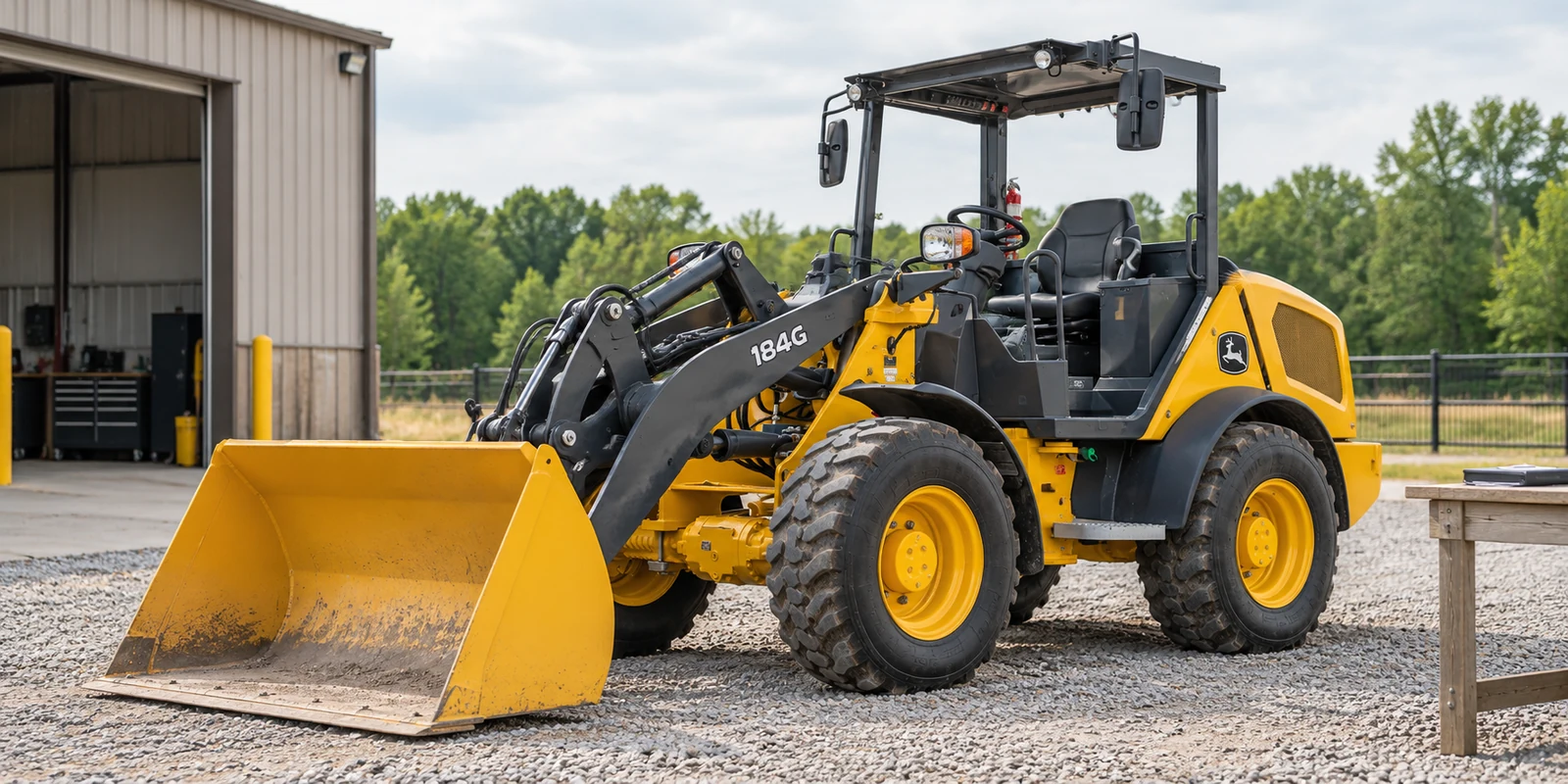
“Loader” can mean a loader for an existing tractor or a complete machine. Deere presents separately from its , which include tractor loaders, skid steers, compact track loaders, backhoes and wheel loaders. Tell the rental branch whether you need an entire machine or equipment for a tractor you already have. Do not assume an attachment will fit from the category name.
Ask the branch to put the offered model, machine identification or PIN, bucket or other attachment, and any transport equipment on the quote. If the offer substitutes another unit, ask it to confirm the changed configuration in writing before comparing it. The is a way to identify the publication that applies to that unit; a generic model page is not its operating manual.
Give every branch the same job brief
Describe the material and where it starts and ends. Add the source of any weight or size estimate, the loading or placement point, the surface and access constraints, and the dates you expect to need the machine. Record gate width, turns, overhead obstructions and the delivery location when those affect access. These are questions for a provider to assess against a proposed unit, not proof that a machine can work safely at the site.
Separate the primary task from any second task. If you need excavation as well as repeated material movement, say so rather than assuming one loader or attachment covers both. For a broader equipment screen, use the landscaping rental guide.
Compare written obligations, not the day rate
Put the same period and job brief beside each written offer. Request the rental start and end rules, working-time allowance, delivery and pickup, included attachments, fuel and cleaning rules, taxes, protection options, damage responsibility and charges for extra time. Leave an item blank when the provider has not answered it; do not calculate a total from missing terms.
For example, distinguish estimated rental charges from delivery, fuel and other potential charges. likewise define equipment through the reservation and agreement. These are examples of those companies’ terms, not promises about a different rental branch. Compare the actual quote and agreement you receive.
Set the handover and fault questions before delivery
Ask which operator manual accompanies the offered unit, what condition and accessory record both sides will make at handover, and whom to contact if a fault appears. Confirm in writing whether any orientation or training is offered, what routine care is assigned to the renter, who authorizes service, and what happens to the rental period if the machine cannot be used. Do not perform repair work on the basis of this checklist.
Do not assume a rental removes those duties. Sunbelt’s published terms, for example, place some inspection and routine-care duties on its customer and say training is not provided unless requested and agreed. Your branch’s signed terms may differ; resolve them before delivery.
Close the request with a return plan
Before booking, ask what action ends the rental period, who arranges pickup, what condition and fuel records are required, and what confirmation you should keep. A changed project date does not itself change a contract. Put the agreed extension or early-return process on the same page as the quote.
Send the brief, request the exact configuration and written obligations, then compare only complete answers. If the offered unit, access or attachment remains unresolved, ask for a corrected offer. If the job points toward long-term ownership instead, use the separate loader buying guide rather than treating rental terms as a purchase comparison.
I think with the right rental agreements, the maintenance issues are handled pretty well! I’d say go for it. Renting could be the way to go!
Definitely! Most companies prioritize keeping their equipment in top shape.
Yeah, Frank! I had a great experience with maintenance covered when I rented last time.
I’m skeptical about the expert training aspect. Do you really get hands-on support? I might be a bit slow learning new tech! 🤔
Yes, Daniel! Most rental agreements include training sessions to get you up to speed!
Totally! I was clueless at first but they really helped me get comfortable.
Is it weird to say I’m excited about eco-friendly options? 😂 I love how companies are stepping up. Definitely considering a rental next time I need equipment!
It’s not weird at all, Emily! Sustainability is super important, and many renters love that aspect.
Wow! I didn’t realize renting a John Deere loader could save SO much! 🤯 I usually thought it was just about buying brand new. I’m gonna look into rental options for my upcoming landscaping project. Any tips on what model is best?
Great to hear you’re excited, Mike! The 1025R is popular for residential projects, but it depends on your specific needs.
I rented the 1025R model last summer, and it was perfect for my yard work! Super easy to operate too.
Didn’t know John Deere had such a robust rental program! Definitely considering it. But what happens if the loader breaks mid-job? Are we on the hook for repairs?
Great question, Linda! Most rentals come with maintenance included, so you typically won’t be responsible for repairs.
If they offer training, then I’m sold! Nothing worse than being left to figure things out alone. Definitely looking into this rental option real soon!
You won’t be disappointed, Tim! Training is usually part of the deal.
That’s a smart move! No one wants to jump into something new without some guidance.
This article was an eye-opener! I never thought about the technological benefits of rentals. I’m all about efficiency! Can we also talk about the environmental part? 🌍 Love that John Deere offers eco-friendly options!
Absolutely, Patricia! Modern models are designed with eco-friendly features. It’s a win-win!
John Deere loaders are the best! I used one on a construction site, and man, talk about power! 🚜 But I’ll stick to owning mine.
They are powerful, Zach! Renting has its perks though, especially for occasional projects.
I find it hard to believe that renting is really that cost-effective. You end up spending more in the long run, don’t you think? 🤷♀️
Not really! If you’re not using the loader full time, renting can save you a bundle. No storage costs either!
Totally agree, David! I rented one last summer and definitely saved cash. Plus, no maintenance worries!
Thanks for your input, Jessica! It really varies based on your usage. Many find renting is cheaper when they don’t need it year-round.
I have an issue with storage. If I rent, will the company help with getting busy equipment out of my yard? I’m tired of that mess!
Most rental services will handle all that for you, Sarah! No more mess, just what you need!
Exactly! That’s one of the benefits. You can keep your site clear and organized.
Honestly, the hassle-free maintenance alone is a huge selling point for me! Who has time for upkeep? I usually just rent things instead of buying for this reason. Do you think it’s as good as owning long-term though?
Good insights, Kevin! It’s all about your project needs and duration.
For short projects, totally! But if you’re on a long-term gig, owning might make sense. It really depends! 🔧
Just rented a John Deere loader last week. Best decision ever. 💪💯 Flexibility is the name of the game! Plus, it’s so easy to use!
Awesome to hear, Bobby! Flexibility is a key advantage of renting.
I appreciate the article! I was always under the impression renting would be more hassle than worth. But this info is making me rethink my strategy!
That’s great to hear, Natalie! Renting really can provide flexibility and convenience.