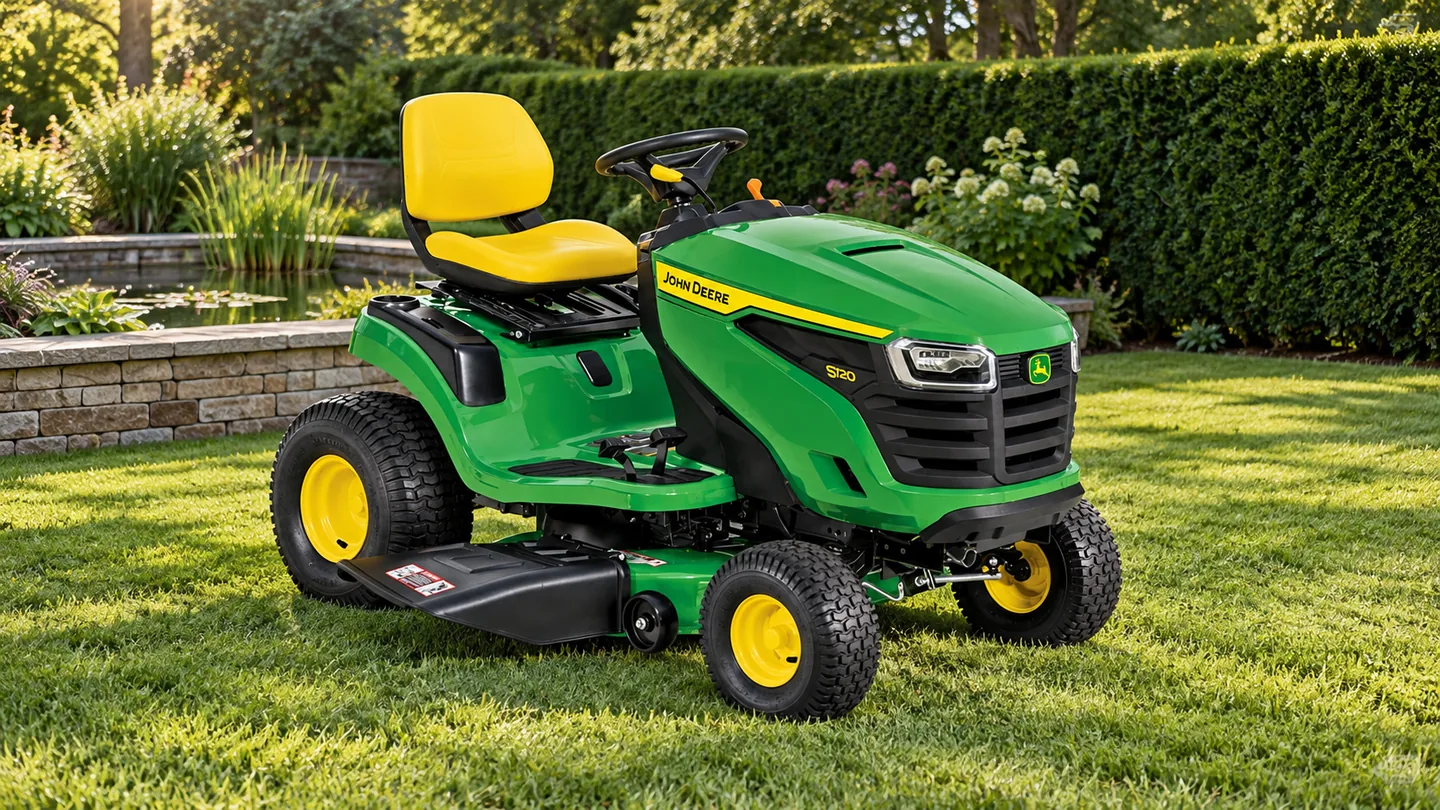
Get Rolling: Mastering the John Deere S120 22 HP
We’ll walk through pre-start checks, fluids, deck setup, operation, maintenance, troubleshooting, and seasonal storage so we confidently operate and enjoy our John Deere S120 22 HP safely all year long.
What We Need
Step 1 — Safety First: Pre-Start Inspection
Could one quick walkaround save us from disaster? Yes — and here’s what we never skip.Walk the perimeter and perform a visual sweep before we touch the key.
Check these key items on every walkaround:
Use the dipstick to check engine oil level and top with the manufacturer-recommended SAE grade if low. Tighten the fuel cap and smell around the tank for leaks.
Examine battery terminals for corrosion; loosen, clean with a baking soda/water paste if needed, and tighten connections snugly. Clear the work area of toys, rocks, sticks, and hidden wires to avoid accidents and damage.
Step 2 — Fluids and Fuel: Fill, Check, and Replace
Want the S120 to run smooth for seasons? Treat the engine like an athlete — fuel, oil, and filters matter.Use fresh, clean gasoline and add stabilizer if we’ll store the tractor; drain old gas that smells sour or shows water in the bottom of the tank.
Change engine oil after the initial break‑in and then per the hour schedule; replace the oil filter with every oil change and recycle used oil responsibly.
Inspect and clean or replace the air filter—replace if it’s dark, oily, or crushed; a clogged filter makes the S120 run hot and sip more fuel.
Check coolant level on liquid‑cooled variants, otherwise clear the engine’s cooling fins of grass and debris to prevent overheating.
Top transmission/hydrostatic fluid to the recommended level if our model requires it and follow John Deere specs.
Use a simple test: if the engine hesitates under load, start with the air filter and fuel quality—those two are most often the culprit.
Step 3 — Starting and Controls: Confident, Safe Operation
Nervous about the first run? We’ll demystify the dash — keys, levers, and safety interlocks all make sense.Sit comfortably, fasten our seatbelt if equipped, and keep the parking brake engaged while we prepare to start.
Place the throttle in the choke or start position when cold, set the PTO (power take-off) to off, and ensure the transmission is in neutral.
Turn the key and listen for any unusual noises. Listen for a steady, brisk crank; recognize that a brief crank is normal, but repeated hard cranking signals battery or starter issues—stop and diagnose if that happens.
Allow the engine to warm for a minute, then gradually move the throttle to a mid-range to test responsiveness. Familiarize ourselves with forward and reverse controls, the deck lift lever, cruise/ground-speed settings, and blade engagement—practice each control at low speed in an open area to build confidence (for example, engage blades briefly on a test strip of grass).
Safe stopping — do these steps in order:
Practice these steps regularly to build muscle memory and keep us safe on uneven ground.
Step 4 — Deck Setup and Mowing Technique
Want the cleanest stripes on the block? Deck height, blade condition, and mowing pattern are everything.Level the deck and set the cutting height for our grass: raise it in hot, shady periods and lower it for cool-season growth, but never scalp — for example, move the height up 1–2 notches in summer stress or down slightly in peak spring growth.
Inspect the blades for sharpness and balance; we sharpen or replace dull blades because torn grass invites disease. Sharpen on a bench grinder or take blades to a shop, then torque blade bolts to the spec in our manual.
Engage the PTO only when blades and area are clear of people, pets, and debris; verify nobody is nearby before switching blades on.
Overlap passes by about 25% for an even cut. Keep a steady ground speed to avoid scalping—if the tractor bogs, slow down or raise the deck. Vary mowing directions between jobs to prevent ruts and encourage upright growth. Mow slopes up and down rather than across for traction and safety.
Clean under the deck after mowing to remove clippings and buildup that reduce airflow and cut quality.
Step 5 — Routine Maintenance and Troubleshooting
Think of maintenance as cheap insurance — what we do monthly will save us a fortune later.Inspect daily for debris and clogged cooling fins; remove grass, twigs, and buildup under the deck and around the engine to prevent overheating.
Check weekly fluid levels: engine oil, coolant (if equipped), and fuel; top off as needed.
Change oil and filters per the hour schedule (for example, every 50–100 hours depending on conditions) and replace the air filter sooner in dusty work.
Grease fittings and check belt tension; replace belts with cracks, glazing, or frayed edges.
Clean battery terminals and ensure the battery is securely mounted; test charge if starting becomes slow.
Keep a simple log of our hours and maintenance tasks so we know when to service components.
Troubleshoot quickly:
Contact a certified John Deere dealer when issues exceed our skills to ensure correct diagnosis and repairs.
Step 6 — Storage, Seasonal Care, and Upgrades
Planning for winter or upgrading performance — here’s how we protect value and add convenience.Clean the tractor thoroughly, removing grass clippings and debris; park on a flat surface and block the wheels if we’ll leave it unattended for a few weeks.
Add fuel stabilizer to the tank and run the engine a few minutes to circulate treated fuel.
Change the oil and filter before long-term storage; disconnect the battery or use a smart maintainer to prevent drain.
Cover the tractor or store it indoors; if we expect heavy moisture or salt, store inside.
Fog the engine cylinders with a recommended fogging oil if the manual suggests it and lubricate pivot points, linkages, and grease zerks to prevent corrosion.
Consider upgrades like a mulching kit, rear bagger, LED light kit, or a cold-weather cab. Confirm compatibility, read installation instructions, and consult our dealer for wiring or large installs to keep the S120 performing and valuable.
You’re Ready
We’ve covered checks, fluids, controls, mowing, maintenance, storage, and upgrades—follow these steps and our routine to enjoy reliable S120 performance for years. Will we keep it running optimally together always?
Loved the ‘You’re Ready’ bit — felt like a diploma ceremony for my lawn 😂
Also, the seasonal storage tips saved me last winter (I won’t be that person who leaves fuel in the tank again). For the record: yes, winterizing is boring but worth it.
Same — I once left fuel in the tank and ended up cleaning the carb for hours. Never again. 🙃
Haha, glad it felt celebratory! Winterizing definitely pays off.
Also: put a cover on it. Keeps critters out and dust down.
And park it on wood or a mat if your garage gets damp — prevents rusting on the deck.
Totally. A little prep in fall = no headaches in spring.
Nice, clear walkthrough. I especially liked the pre-start inspection checklist — saved me from starting my mower with a half-empty oil pan (whoops). Quick tip: I also check tire pressure every time; it makes a big difference in cut quality.
Would love to see a short checklist PDF or printable one for the ‘Safety First’ section.
Great idea, Alex — I’ll add a downloadable checklist in the next update. Glad the inspection tip helped!
Tire pressure is underrated. I use a small handheld gauge and it takes 30 seconds.
Yes please for the PDF! I tape checklists to my garage wall lol. Saves remembering stuff after a long winter.
Thanks for this guide — it cleared up some small misconceptions I had about oil change intervals and winter storage. One small correction request: in Step 3 you mention choke usage but I think the S120 has an automatic choke depending on year/model. Maybe clarify that for different model years?
I had an older S120 with manual choke, so that note would’ve helped me too. Appreciate the clarification!
Thanks, Priya — good catch. I’ll clarify choke vs automatic choke variations by model year in the update.
Deck setup AND mowing technique section = gold.
I used to scalpe my lawn trying to get it ‘perfect’ and this guide helped me slow down and adjust deck height properly. Also loved the part about cutting in different directions to avoid ruts.
Longer comment bc I wanna mention specifics:
– I raised the deck 1 notch after following the guide and my ride looks so much better.
– The guide’s mowing overlap tip is a life-saver.
– Could you add more about mulching vs side-discharge in future updates?
Maya — same here. Rotating mowing patterns helped my lawn recovery too.
Agree on blade sharpness. Also, if you mulch wet grass you’re asking for clumps — wait until it’s drier.
Thanks, Maya — mulching vs side-discharge is on the roadmap. I’ll include pros/cons and ideal conditions for each method.
Mulching kept my yard healthier, but you need to keep blades sharp. The guide mentions blade care, which helped a lot.
Any suggestions for performance upgrades? The guide mentioned upgrades but didn’t go deep. I’m thinking a high-flow air filter or maybe better tires for traction on slopes.
Consider a quick-attach bagger or mulching kit depending on your yard — both are worth it depending on your needs.
Good callouts. A high-flow air filter can help in dusty conditions; better tires are a great upgrade for hilly yards. I’ll add a short upgrades subsection with pros/cons next revision.
If you go for tires, look for ones rated for turf to avoid killing grass. And get a kit with wheel weights if you’re on slopes.
Good guide overall. Quick question: anyone else had issues with battery drain after sitting over winter? I did the storage steps from the guide but my S120 still had a weak battery come spring. Any troubleshooting tips?
If the battery keeps losing charge, try a maintenance charger during storage or disconnect the negative terminal. Also check for parasitic draws like lights or aftermarket accessories.
I had the same issue — swapped to a battery maintainer and it fixed it. Also test battery voltage before putting it away; if it’s low, replace it.
This guide was exactly what I needed before summer. I followed the maintenance schedule in Step 5 and my tractor ran smoother than ever.
One story: I ignored a small vibration for months — finally checked the blades per the guide and found a bent blade. Once I replaced it, the vibration and uneven cut were gone. Moral: follow the troubleshooting steps ASAP.
Pro tip: keep a spare blade or two in the shed. Saves mowing downtime.
Great example, Diane — thanks for sharing. Bent blades are sneaky but common.
Also balance the blades after sharpening — makes a huge difference.
Same thing happened to me. Vibration was my clue to check blades and spindle bearings.
Nice step-by-step but I felt Step 2 (Fluids and Fuel) could use more visuals. I had to double-check which dipstick was for oil vs transmission on my S120. Maybe a labeled photo would help newbies.
Good point — adding labeled photos of the engine bay and fluid points is planned. Thanks for the suggestion!
Yup, that confused me too at first. A simple image would cut down mistakes.
Question about safety: the guide’s pre-start inspection mentions checking belts and guards. How often should belts be replaced in normal use? Also, what PPE do you guys wear while working on the deck?
Longer context:
I do weekly mowing May–Sept, live in a suburban area with some trees, and try to do a full inspection monthly. I want to avoid snapping a belt mid-season.
Thanks!
I replace mine every 2-3 years or sooner if I see wear. Also check pulleys — a bad pulley can eat belts fast.
Belts typically last several seasons depending on usage and conditions. Inspect monthly for cracks or glazing; replace if you see damage. For PPE: safety glasses, gloves, and steel-toe boots are good practice when working on the deck.
Loved the fluids section — but a quick note: the guide lists the oil type, but I used a different brand and had no probs. sry for the typo, but FYI: stick to the viscosity recommendation and you’re fine. 🙂
And always change the filter with the oil — cheap insurance.
I’ve used a couple of different brands too with no issues. Just avoid low-quality oil.
Right — viscosity and OEM specs matter more than brand. Glad it worked out for you.
Some solid mowing technique tips here. My addition: slow down on slopes and use short, overlapping passes for the cleanest finish. Also, when in doubt, raise the deck and take an extra pass rather than pushing for a lower cut in one go.
Short passes are my go-to for tricky spots. Less stress on the mower too.
And keep your hands off the deck while it’s running, obviously. 😅
Good tips, Ryan. Safety on slopes is key — glad you highlighted that.
Don’t forget to watch for hidden obstacles — sticks and rocks wreck blades fast.