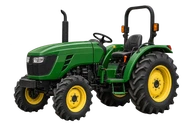
A loader specification is useful only when you know which loader, machine, attachment, and measurement point it describes. Do not compare a compact-tractor loader with a wheel-loader or skid-steer rating as if the numbers measured the same thing.
Read each number in context
| Specification | What to confirm | Common mistake |
|---|---|---|
| Lift capacity | Where the load is measured, loader position, and the document’s rating definition. | Comparing values measured at different points as though they were equivalent. |
| Lift height | The stated reference point and whether the value applies to the bucket, pivot, or another point. | Treating maximum height as the height at which full capacity is available. |
| Breakout force | Where and how the force is measured and which bucket or attachment is specified. | Reading breakout force as a safe lift rating. |
| Hydraulic flow and pressure | The circuit, test conditions, and machine configuration named in the manual. | Using a general figure to approve a hydraulic attachment. |
| Operating weight | Included options, attachment, fluids, and ballast in the listed configuration. | Comparing a base machine with a fully equipped setup. |
One loader, four differently defined lift figures
The shows why a rating needs its row label. The following values were checked on October 5, 2026. They belong to that published reference configuration, not an unidentified machine or a particular lifting task.
| Loader position | Measurement point | Published value |
|---|---|---|
| Full height | At pivot | 2,396 lb |
| Full height | 500 mm ahead of pivot | 1,764 lb |
| 59 in. (1,500 mm) | At pivot | 2,881 lb |
| 59 in. (1,500 mm) | 500 mm ahead of pivot | 2,299 lb |
Comparing the first two rows changes the measurement point while holding the height label constant. Comparing the second and fourth changes the height while retaining the forward measurement point. Neither comparison identifies how much an arbitrary pallet, suspended item or load on a different attachment may weigh.
The source also identifies a tractor configuration, tires and a materials bucket. Confirm all applicable conditions for the actual combination rather than extending these values to every 4M or 4R tractor. The 400E is not evidence for a machine advertised only as “John Deere 400.” A shared number within a model name does not establish the same equipment.
Do not pick the largest row, subtract an assumed bucket weight, or convert this example into a safe-payload calculation. Breakout-force and rollback entries answer other specification questions; they are not additional lift allowances. This is a reading exercise, not a load chart or operating instruction.
Ask the supplier: “Please identify the applicable document, the rating line and its measurement point, height, tractor configuration and working attachment for this offer. Which conditions or limits apply to the intended task?” Leave the comparison unresolved until those answers are documented.
Keep loader types separate
First identify whether the document covers a loader mounted to a compact tractor, a compact wheel loader, a skid steer, or another machine class. The mounting system, stability limits, measurement conventions, and operating conditions can differ. Label the machine type before comparing models.
Use the complete operating configuration
Check the tractor-loader pairing and serial range, then account for the bucket or forks, attachment weight, load center, ballast, tires, and surface. A fork may extend the load forward compared with a bucket; the correct capacity must come from documentation for that attachment and position.
Find model-specific literature through and attachment information in Deere’s . For a lift decision, use the pallet-fork fit guide; do not substitute a general comparison table for the loader’s own rating.