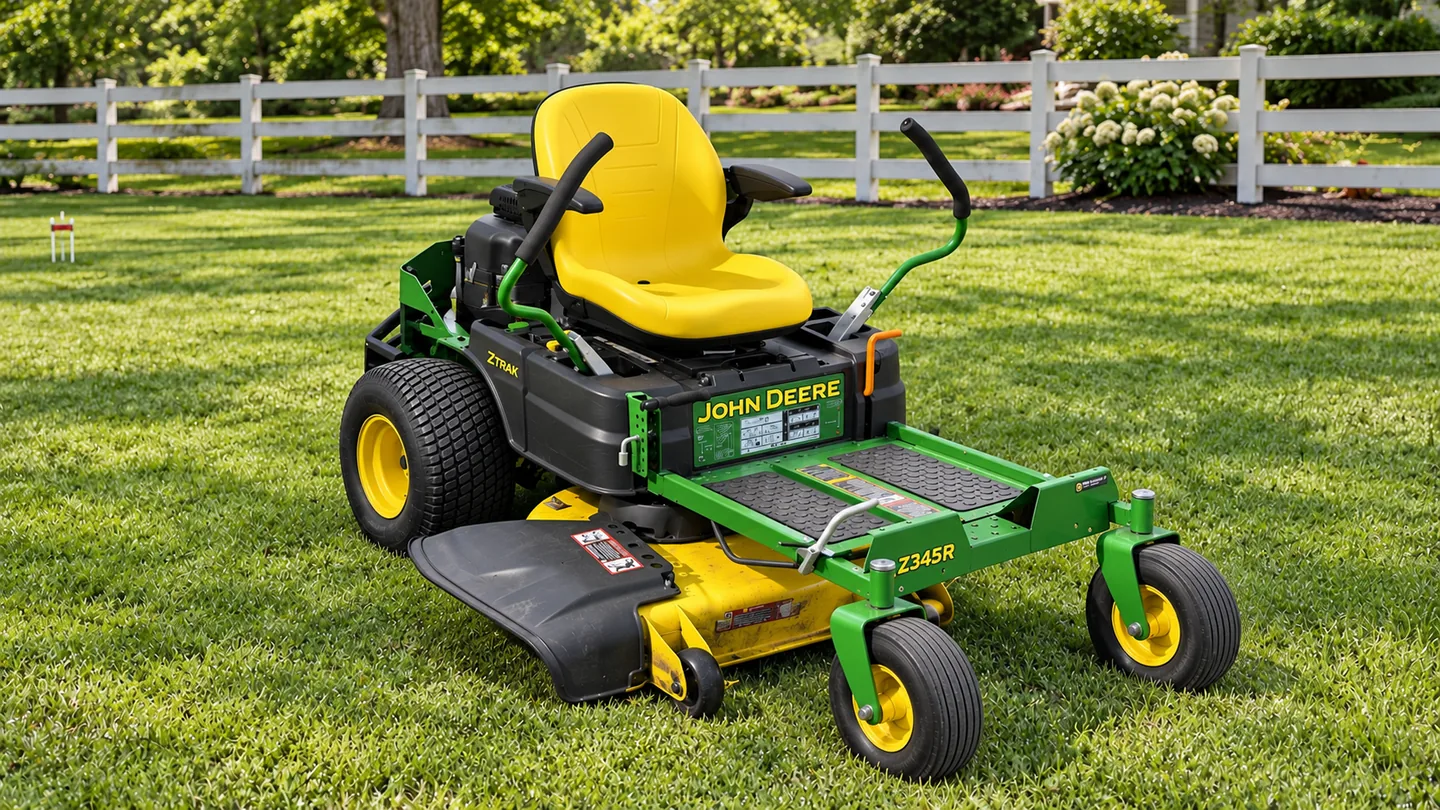
For a John Deere Z345R offer, establish which machine is being sold and what equipment is fitted. Ask the seller to itemize the equipment and describe its condition before judging the asking price. The R suffix alone leaves those questions unanswered.
This guide uses manufacturer documentation. No hands-on comparison, mowing-time estimate or resale valuation was carried out for it.
Equipment & supplies
Identification tools for Z345R ZTrak Residential Zero-Turn Mower
Read the machine and component markings before ordering. These inspection tools do not establish part fit.

Ullman HTC-2 inspection mirror
Read an accessible identification plate from another angle when collecting details for the matching manual.

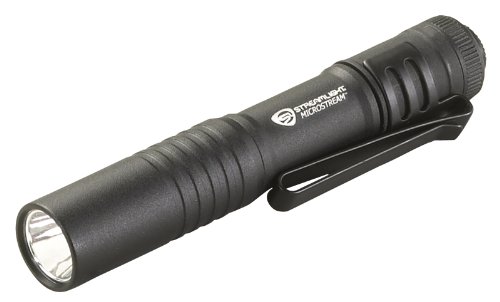
Streamlight MicroStream pocket light
Read accessible identification and warning labels after following the machine's shutdown instructions.

As an Amazon Associate I earn from qualifying purchases.
The Z345R reference configuration
Deere’s 2020 North American OMUC28756, Issue K0, includes the Z345R for serial numbers 160001 onward. Printed page 53 lists the Z345R with 42A at 50.5 inches wide, 72.3 inches long, and 501 lb with mower and full fuel. .
Use these values as references for the documented configuration. Confirm the identity and equipment of the offered machine: the dimensions do not certify clearance through your route, and the weight does not cover every attachment combination. Figures from another Z300 model or an unspecified year cannot fill those gaps.
Ask what the R offer actually includes
Have the seller mark each item as fitted, included loose, available separately, or missing or in need of repair. Apply those states to the actual mower in the following checks.
| Area to inspect | Evidence to request | Do not assume |
|---|---|---|
| Seat and armrests | Actual fitted assembly, adjustment and condition. | That a replacement seat matches the original specification. |
| Deck-lift controls | Installed mechanism and any modification history. | That a visible pedal proves the complete correct assembly is fitted. |
| Floor coverage and controls | Photos and an inspection of the offered machine. | That a stock marketing photo shows what will be delivered. |
| Clippings equipment | Each included chute, collector or mulching component. | That “bagger ready” includes a usable collection package. |
General fit is not a parts-order confirmation
John Deere’s includes both Z345M and Z345R in its general equipment list and asks buyers to select their equipment for a more accurate fit. A shared model list does not establish that a component is installed as standard, that a kit is complete, or that it matches your exact machine.
Ask for the part or kit identification and resolve its application before ordering. Record completeness separately from price: a low-priced accessory may still be incomplete.
For an offer that includes a replacement deck, use the 42-inch deck package checklist to separate what arrives from what must be reused or bought separately.
Compare the actual Z345R and Z345M offers
Compare equipment and condition on the two machines. Ask the seller which differences affect your work and which are included accessories. A universal claim that the Z345R cuts faster, lasts longer or costs less to maintain than the Z345M would need evidence this guide does not have.
Record equipment included, work needed and support available for each offer. When one offer contains no service record, leave that field unknown. Do not treat silence as evidence that service was completed or that no repair is required.
Limits to resolve before using the machine
Before using the mower, read the . Use the manufacturer’s instructions for terrain, guards, safety devices, loading and storage. This checklist cannot authorize an operating procedure.
If the machine has an unresolved safety-system fault, unverified modification or uncertain repair, obtain a qualified assessment rather than testing a workaround. This guide does not provide switch-bypass instructions, a universal slope limit or an attachment approval.
Prepare the next question
Use Offer Scope Check to record differences between written offers without assigning an automatic winner. Use Parts Request Brief when a part or installed component needs identification. For a wider choice of machine types, go back to John Deere Mowers.
About the comments below: the discussion is not verified model documentation. Check equipment, operating and service advice against the applicable manual; a comment does not confirm fit or safe operation.
Question: how loud is it? My HOA is picky and I usually mow early. The article mentions engine performance but not dB levels. Anyone measured noise?
I use ear protection anyway. Best idea regardless of mower.
Not sure exact dB, but compared to my old push mower it’s louder — obviously because it’s a bigger engine. It’s not obnoxious though. Mow later if HOA’s strict.
Good callout. We didn’t include official dB readings because manufacturers rarely publish them for residential ZTraks. Anecdotally, they’re comparable to other residential zero-turns — louder than push mowers but quieter than many commercial units.
Great write-up — I’ve been eyeing the Z345R for a while. The section on operator comfort sold me: that adjustable seat and easy controls sound perfect for my weirdly hilly yard.
One question: anyone know how it handles wet grass? I mow in the morning and sometimes the lawn’s still damp. Thanks!
I’ve pushed mine through dewy mornings a few times. Not perfect — you get some clumps and the cut isn’t as crisp — but nothing crazy. Just clean the deck after and you’ll be fine.
If yours tends to clog, try raising the deck 1 notch then slow your forward speed. Helps until it dries out. 😊
Thanks Emily — glad the comfort section resonated. The Z345R does fine in slightly damp grass, but like most deck designs, very wet conditions can cause clumping. The article’s tips on deck care (regular cleaning and belt checks) help a lot after wet mowing.
Love the ergonomics section — the tilt/floating deck talk was spot on.
Longer note: I’ve got arthritis in my wrists and the control placement on the Z345R is one of the main reasons I’ll probably buy it. Less vibration, intuitive levers. If anyone needs low-impact operation, this model is worth trying at a dealer for a demo ride.
Does it have cruise control? My neighbor swears by it for flat yards.
Agreed. Ergonomics are underrated. Also check seat suspension — big difference on bumpy sections.
This is super helpful — my dad has bad wrists. Maybe I’ll take him for a test ride this weekend.
Thanks for sharing your experience, Priya. Demo rides are excellent for getting a feel for vibration and lever placement — very personal preferences.
I laughed at the ‘who it’s designed for’ bit — basically says “people with big lawns who don’t like push mowers” 😂
On a serious note, the maintenance section was helpful. I’m not mechanically inclined, so the troubleshooting tips and simple maintenance checklist will actually make me less nervous about owning one.
Thanks Sandra — we tried to keep the maintenance tips approachable. If you want, I can pull together a printable checklist (oil, filters, belt inspection intervals) in a follow-up.
Small gripe: the article didn’t dig into resale value. Are these Deere residential ZTraks easy to sell used? I always think of them as decent, but curious what others have seen.
Good point, Jason. We touched on value but not in-depth resale data. Generally, John Deere holds value well compared to cheaper brands — service history and condition matter most.
I sold my 3-year-old Deere for a decent price last spring. Clean service records helped a lot.
Nice overview but I wanted more hard numbers on fuel efficiency. The article mentions ‘good for the class’ — can we get MPG or hours-per-gallon estimates? Kinda vague imo.
Minor nitpick: the troubleshooting section mentioned belt wear but didn’t list belt part numbers or how long belts typically last. Some more specifics would be great — belts are the nagging thing on mine.
Thanks — noted. We avoided part numbers because they vary by deck and year, but adding a table or link to common part numbers would help. Belts vary widely (100–300 hours typical) depending on conditions.
Not a fan of the price tag TBH. The article defends it in value terms, but if you’re not mowing acres, might be overkill. I’d like a cheaper alternative comparison in the buying advice section.
Valid criticism, Tom. The buying advice tried to balance cost vs. features. We can add a short comparison to sub-$4k mowers for readers with smaller yards.
If you mow <0.5 acres, a smaller economy zero-turn or a walk-behind might be smarter. Payments vs usage math saved me from overspending.
Been using a Z345R clone-ish model at my rental property. Quick notes:
– Engine is peppy for a residential unit
– Deck gets the job done but needs frequent blade sharpening for perfect stripes
– Steering is intuitive
Would love to hear if John Deere warranty actually covers the odd gearbox noise someone mentioned in the comments here.
Mark — good real-world notes. Warranty typically covers manufacturing defects but not wear-and-tear or improper maintenance. For gearbox noises, Deere dealers usually diagnose under warranty if reported early. Always keep service records.
I do blades and oil changes myself. Super simple once you have the right wrench. Saves me cash.
Thanks for the tip, Mark. Do you change blades yourself or get a shop to do it?
Same here — pro tip: buy a blade balancer. Makes everything neater and less vibration.
Had a weird grinding once — turned out to be a loose pulley. Dealer fixed it under warranty, but it did require a trip to the shop. Keep an ear out.
Honestly tempted to replace my old mower. Love that the article covers attachments — are there good mulching kits for this model? I like the idea of cutting less often and returning clippings to the lawn.
I installed an OEM mulching kit last season — noticeable difference in appearance and it composts well into the turf. Just make sure to sharpen the blade more often.
Olivia — yes, there are John Deere-compatible mulching kits for the Z345R and similar decks. The article’s buying advice section mentions looking for OEM kits for best fit, but quality aftermarket kits exist too. Mulching helps if you mow regularly and the clippings are short.