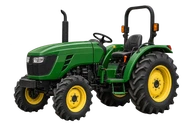
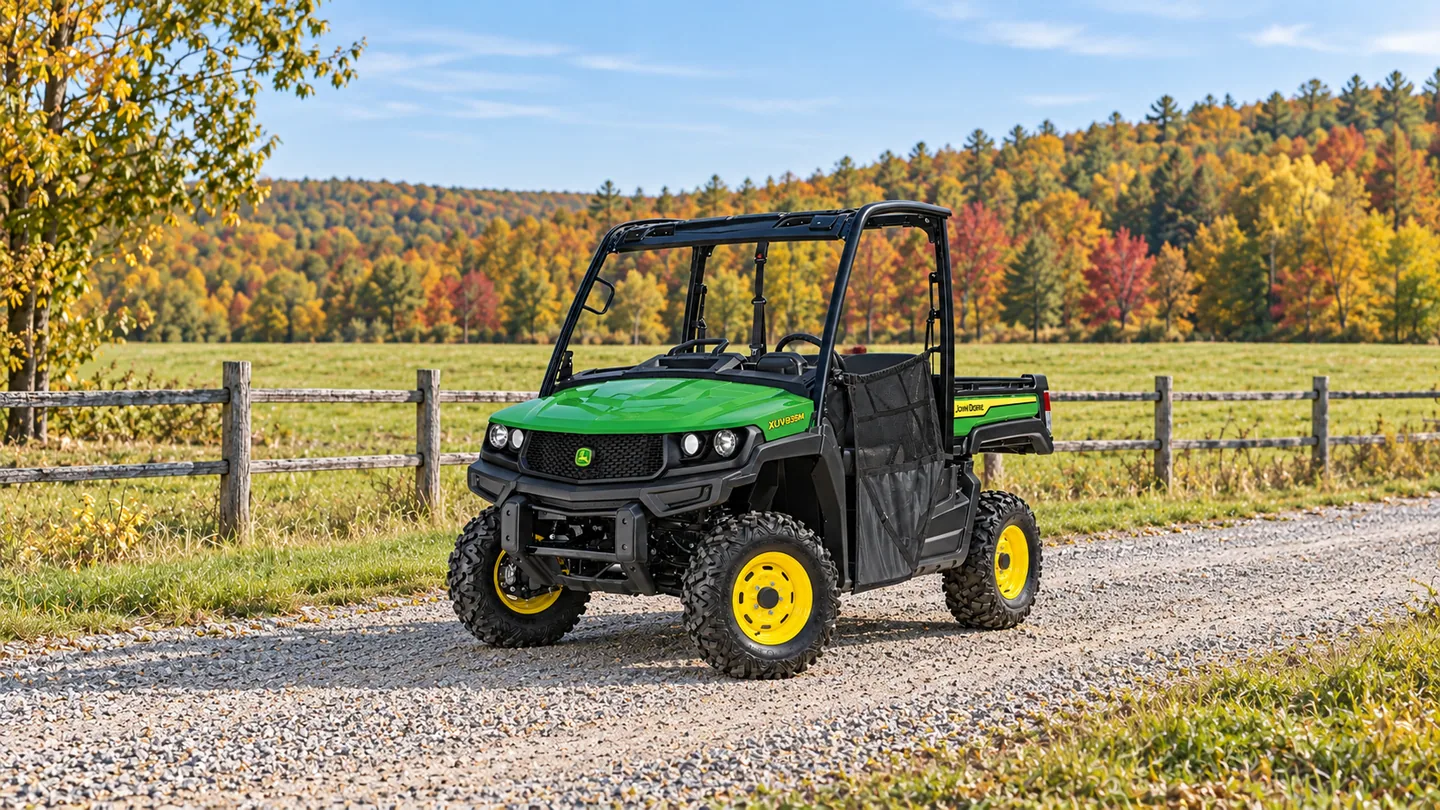
The John Deere Gator name covers a family of utility vehicles, so the badge alone does not tell you whether a machine suits a muddy access track, a loaded trailer or a crew. Start with the people and materials you need to move, then check the exact vehicle’s ratings, fitted equipment and operator’s manual against that route.
Start with the work the Gator must do
Write down the heaviest routine load, the number of occupants, any trailer or powered accessory, and the narrowest or most difficult part of the route. Include access to the shed and the place where a load will be unloaded. An empty demonstration drive does not answer all those questions.
Keep cargo, payload and towing ratings separate
Deere’s U.S. MY2026 XUV560E ordering sheet, dated May 5, 2026, lists the following separate limits. This is one documented model example, not a specification for every Gator.
| XUV560E field | Listed value | What to check on the vehicle you are considering |
|---|---|---|
| Occupants | 2 | Number of designated seats and the manual’s occupant requirements |
| Cargo-box capacity | 500 lb | Box load, placement and any fitted cargo equipment |
| Payload capacity | 900 lb | The manual’s definition and all loads counted toward it |
| Towing capacity | 1,500 lb | Approved hitch, trailer and operating conditions |
Do not add these figures together to create a larger carrying allowance. Do not treat the towing figure as a cargo-box limit. Calculate the proposed load using the exact manual; occupants and installed equipment can leave less capacity for materials than a headline rating suggests. .
Check the route before relying on four-wheel drive
The XUV560E sheet lists selectable four-wheel drive. That does not establish that every Gator has the same drive system, tires or ground clearance, or that a particular slope is suitable. Follow the operating limits and procedures for the exact machine. If a section of the route is outside them, choose another route or another way to move the load.
Walk the route first. Record gates, soft ground, ruts, side slopes and places where turning or reversing would be difficult. Assess the loaded task, not just whether an unloaded vehicle can pass. Four-wheel drive does not replace the manual’s instructions for speed, load placement or slope operation.
Verify the actual machine before comparing offers
Record the model, product identification number (PIN), model year if confirmed, engine identification and installed options. Ask for the applicable operator’s manual. Use those records to compare offers; two machines described simply as a Gator may have different seating, cargo equipment and controls.
For a used vehicle, inspect the tires, cargo box, hitch, accessible hoses and evidence of leaks or damage with the machine parked and secured as its manual directs. Review service records and ask the dealer to investigate unresolved faults. Hours and appearance are useful records, but neither proves a remaining service life or freedom from repair costs.
Check which controls and connected features are fitted
Before a demonstration, identify the drive selector, differential controls if fitted, parking controls and display warnings with the dealer or manual. Confirm that the intended operator can enter, sit and use the controls correctly. A display or familiar control layout is not evidence of training or of an automatic safety function.
If location or fleet information matters, ask which connected hardware and service are actually installed, what information is available, and whether coverage is adequate where the vehicle works. Deere’s Gator connectivity information has model, installation and kit conditions. Do not equate a location display with automatic guidance or assume a connected function is included across the range. .
Treat accessories as part of the configuration
For a sprayer, spreader, plow or other accessory, obtain the exact accessory reference and the installation requirements for the vehicle’s PIN. Confirm mounts, electrical supply where required, load effects and any additional equipment. An accessory that appears in a Gator catalog is not automatically accepted on every model.
Include the proposed cab, roof, windshield and cargo fittings when checking overall dimensions and access. Ask the supplier to confirm the complete combination. Choose storage or appearance accessories after the work configuration is resolved; they do not increase the vehicle’s listed capacity.
Compare operating needs without assuming fuel savings
Compare the actual fuel or charging arrangements, refueling or charging access, service requirements and storage conditions of the specific candidates. A fuel type, emissions label or electric powertrain alone does not supply a cost-per-job or range comparison for your route.
For a useful comparison, record the same job, load and route for each candidate and ask for the relevant operating information. Leave fuel cost, range and time savings unresolved when comparable evidence is unavailable. Fewer journeys may be a planning goal; it is not a measured result until the load and route work in practice.
Use inspection tools for a defined task
Use owner accounts to identify questions worth checking, then verify the answer on the exact vehicle. For service work, locate the prescribed inspection or lubrication point in its manual first. Shut down and secure the machine before looking into inaccessible areas; these tools do not make a running-machine inspection appropriate.
Tools for a Gator identification and service check

Ullman HTC-2 inspection mirror
View an identification label or accessible inspection point outside your direct line of sight on a parked, secured machine. A reflected view cannot establish internal component condition.

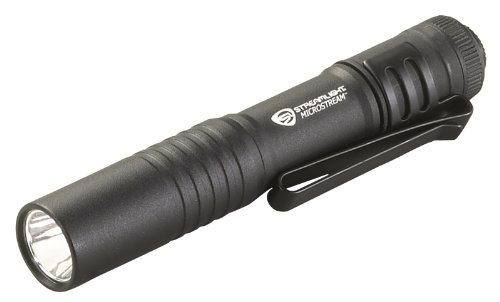
Streamlight 66318 MicroStream flashlight
Light a shaded label or inspection point while recording the vehicle's identity. This listing is the 45-lumen model; it is not the MicroStream USB version.

LUMAX LX-1152 grease gun
Use the flexible hose at a lubrication point identified in the vehicle's manual, after checking access and the required grease. It does not identify which points need grease or set the service interval.


As an Amazon Associate I earn from qualifying purchases.
Bring a completed work sheet to the dealer
Before choosing a vehicle, bring the exact model/PIN, occupant count, proposed cargo and trailer loads, route restrictions and accessory list. Ask the dealer to resolve any missing rating or installation requirement against the appropriate documents. Keep the purchase open if a required part of the route or configuration remains unverified.
What’s the deal with the advanced tech features? I’m all for having gadgets, but don’t want to be fiddling with a computer instead of working. Is it user-friendly enough?
Honestly, if you’re worried about it, I’d recommend going for a test drive. You can get a feel for everything hands-on! 👍
@OldManJenkins I’ve had some tech struggles too. The features can be complex, but once you get the hang of it, they really save time! Just need to read the manual once or twice. 😅
Good question! The tech is designed for ease of use, but like any new system, there’s a slight learning curve. Many users appreciate the functionality once they adapt.
While I get the Gator is tough, what about those little details that make a big difference? Like the cup holders and comfort? 😂 Just saying, a comfortable ride matters after being out in the fields all day!
@JustMeInMyWagon Haha, yes! Cup holders are life! 😂 But really, I found the seats pretty comfy too. It’s like they thought about us farmers have long days! 🙌
Comfort and usability are definitely a part of the design, and many users have praised the ergonomics. Glad you’re thinking about that!
I’m in the market for a utility vehicle and the Gator looks awesome. But I read somewhere about the maintenance costs being high? Anyone care to shed some light on that? 🤷♀️
I think a lot of it depends on how rough you are on it. If you’re out there tearing it up, maintenance is just part of the deal. 😏
@KraftyKati I’m not sure where you read that, but I haven’t noticed too high of costs. Regular maintenance is pretty standard, and I think it’s worth it for how well they perform! 🛻💨
Maintenance can vary depending on usage, but many users find it manageable. It’s always a good idea to keep track of regular checks!
I’ve had my John Deere Gator for almost a year now, and I can’t express how much I love it. 😍 It crushes tough terrain like a champ, and moving stuff around my property has never been easier. Plus, the customization options are pretty sweet! Sometimes I wish I had gone for the bigger model, though. What are your thoughts on the better models? Are they worth the extra $$$?
@TommyBakes I feel the same way! I got the bigger model after trying out my friend’s and OMG it handles everything perfectly! Totally worth the investment! 💵✨
Glad to hear you’re enjoying the Gator! The bigger models do have more power, so if you need it for heavy-duty work, they might be worth it!
Can we just take a moment to appreciate how environmentally friendly these machines are? I love that they’re built with efficiency in mind. Makes me feel less guilty for driving around all day. Just wondering, how’s the battery life in the electric models? 🤔
Great point! The electric models are designed for efficiency, and many users report a full workday battery. Depending on usage, you can expect around 8-10 hours of runtime.
Where do you usually use it? I love outdoor stuff, but some places I go to seem like they’d eat any vehicle alive! 😅
@NatureGuy82 I’ve heard good things about the battery life! A friend has one, and he says he can get a full day of work out of it without needing a charge, which is pretty impressive! 🌱🔋