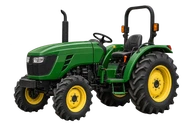

A rough trail can expose a problem with the route, the load, or the vehicle. Before changing tires or suspension on a John Deere Gator, identify the exact machine and check the instructions that apply to it. Keep one note with the model, route, load and unresolved symptom; it will make the manual lookup or dealer conversation specific.
Identify your Gator before changing its setup
Write down the model, product identification number (PIN), fitted tire markings, and any relevant options. Use those details to find the applicable operator manual through . A manual for another Gator may show a useful question to ask, but its settings and limits do not transfer to yours.
What the model tells you, and what it does not. An engine figure or advertised top speed cannot tell you whether a particular muddy slope, rut, or loaded turn is suitable. Record the terrain and the task, then use the operating and safety sections for the identified machine. If a warning light, unusual noise, or loss of control is involved, deal with that symptom before shopping for an upgrade.
- Machine model and PIN: ______
- Manual title, revision, and applicable PIN range: ______
- Fitted tires and options: ______
Do not borrow another model’s limits
Gator is a family name, not one set of tires, controls, or load ratings. When a search result names a different model, use it to locate your own documentation rather than copying its pressure, payload, or drive instructions.
If the model or PIN is unreadable, photograph only an accessible label on a parked machine and ask a Deere dealer to help identify the correct literature. Do not reach into a moving or raised assembly to obtain a photo.
Record the route and the symptom
Describe the obstacle before choosing a part. A shallow rut, loose stone, standing water and an uneven side slope raise different questions. If the applicable instructions and conditions do not resolve the route limit, choose a different path.
- Surface and obstacle observed: ______
- Load, passengers, and trailer at the time: ______
- When the symptom appeared and whether it recurred: ______
If traction drops. Note which surface caused the loss and whether it happens with the same tires and load on easier ground. The record is useful to a dealer; a different tire is not proof that the route becomes safe.
After an obstacle strike. Stop using the route if you suspect damage. From a safe, parked position, note visible damage or leakage and arrange an appropriate inspection. A skid plate may protect a specified area, but it does not erase the machine’s ground-clearance limits.
If a warning or loss of power appears. Record the displayed warning and the conditions when it appeared. Follow the identified manual’s response; do not treat repeated overheating, abnormal sound, or poor response as a reason to keep pushing through the obstacle.
When mud hides depth or footing. Do not infer a safe water depth or a guarantee of grip from an all-terrain label. If the crossing is uncertain, use another route and check the machine-specific instructions before attempting a different one.
Check the fitted tires against the right manual
John Deere’s directs readers to tire descriptions and inflation pressures for load conditions in its specifications. Its model and revision are not established as yours. Find the corresponding table for your exact Gator before changing pressure or size.
Check approval before choosing a tire. Compare the fitted tire’s size and position with the applicable manual and any approved tire-option document. Ask the dealer about a proposed alternative on the identified machine, including clearance and load implications. “Mud” or “all terrain” on a product page is not a fitment decision.
- Current tire markings, front and rear: ______
- Manual tire option or approved kit reference: ______
- Unresolved fitment question: ______
Find the pressure for the actual load condition
Use the exact manual’s tire and load table and the tire option actually installed. Do not apply a universal airing-down range to an unidentified machine.
Record the table page and the load condition used: ______. If either is uncertain, obtain the correct instruction before using the machine; an assumed setting is no basis for a trip.
Inspect before replacing. Use the model’s inspection and service instructions to check for damage, wear, and pressure. Do not assume a rotation pattern or mix tire types without the applicable guidance.
Inspection finding and manual page: ______. A persistent traction complaint after a documented tire check needs further diagnosis, not a promise from a tire label.
Make a load record before a rough-ground trip
John Deere’s distinguishes actual gross vehicle weight (GVW) from gross vehicle weight rating (GVWR), the maximum permissible vehicle weight. In that example, payload is the combined weight of occupants and cargo-box load; cargo-box capacity is a separate specification, and options and trailer tongue weight also affect the load calculation. Use your own machine’s manual and labels for its components and limits; do not reuse the example’s figures.
Count what is actually on the vehicle
Record occupant, cargo, installed-option, and any trailer tongue weights separately. Cargo volume or the dimensions of a box cannot establish its weight. A carrying-capacity number without the correct model and configuration cannot guide the load.
- Applicable manual and rating-label references: ______
- Occupants, cargo, options, and trailer tongue weight: ______
- Which applicable limit is closest, and what remains unknown: ______
A slope adds a separate route question. Do not use a stated payload rating as permission to take the same load over an uneven or sloping route. Check the route and load guidance in the applicable manual, including any condition that calls for a smaller load or different route.
Route and load guidance located in your manual: ______. If the limit or footing cannot be established, change the plan.
Springs do not rewrite the rating. A spring or shock change cannot, by itself, establish a higher permitted vehicle or cargo rating. Get written model/PIN fitment and the applicable rating documentation for any proposed kit.
Proposed kit, approved application, and the rating it does or does not change: ______. If that effect is undocumented, do not assume a new rating.
Treat suspension changes as a fitment question
Describe the behavior first. Write down whether a harsh ride, sag, noise, or uneven stance occurs unloaded, loaded, or on a particular surface. A symptom record supports inspection; it does not identify a failed part.
Ask for the exact kit application
For a replacement shock or spring, request the product’s model/PIN application and installation instructions. Do not assume a brand, adjustable setting, or faster cornering is suitable for this Gator.
- Observed behavior and current parts: ______
- Proposed kit identifier and documented machine match: ______
- Dealer or qualified technician’s unresolved question: ______
Installation is not approval. A qualified installer can assess and fit a supported kit, but workmanship does not supply missing application or rating evidence. Keep the vehicle within its documented limits after any work.
Check protection and recovery equipment on paper
Guards and recovery equipment may be listed for some vehicles. This article does not establish that a particular product fits yours or makes a previously unsuitable route suitable.
Skid plates. Ask which model and PIN range a plate covers, what it protects, how it mounts, and whether it affects service access or clearance.
Plate identifier and written application: ______. Record the stated coverage, not a blanket promise against underbody damage.
Front guards. Check the identified guard’s mounting and compatibility with existing options. A guard is not evidence that the vehicle can push through hidden obstacles.
Guard identifier, compatible options, and installation document: ______.
Recovery equipment. Get the exact approved mounting and use instructions before considering a winch or other recovery system. Recovery methods and loading limits belong in those documents and qualified help, not a generic rough-terrain article.
Recovery product and vehicle-specific documentation: ______. If none is available, defer the purchase and the operation.
Keep the documentation with the machine. Store the kit’s instructions with the operator manual and record any effect on service or load calculations. If a supplier cannot identify the exact configuration, ask Deere or a qualified installer before ordering.
Before the next trip
Keep the vehicle record, route notes, manual references and unresolved symptoms together. If the trip still depends on an unknown limit, an uninspected fault or an unapproved part, revise the route or seek model-specific advice before going.
I liked the section on suspension modifications. But honestly, it feels like a bit much – are there simpler options out there? I’m not looking to turn my Gator into a monster truck! 😂
Yeah, I feel you! Some simple tweaks can do wonders without going overboard. Just some basic shocks can help a lot! Stick to the essentials.
Great point, Emma! You don’t need extreme modifications unless you’re tackling some really rocky paths.
Monster truck vibes might actually be fun, tho! 😂 But yeah, simplicity’s key if you just want a smooth ride.
This article made me wanna take my Gator off-roading ASAP! 🌲💪 Anyone here done any crazy trails with theirs? Share those stories! Let’s go for adventure together!
Right? The adventures I’ve had are incredible! The Gator absolutely delivers in those situations.
Love the enthusiasm, Samantha! Off-roading is definitely what these Gators are made for!
I’ve done some wild trails, and nothing beats that thrill! Just make sure your Gator is prepped!
This was super helpful. I just got my Gator and wasn’t aware of all the challenges it might face on rough terrain. Thanks for breaking it down! Will definitely be looking into protective gear next!
So true! Gear can save you a fortune in repair costs down the line. Don’t skimp on it!
Thanks, Lydia! Protective gear is super important, especially if you’re venturing off-road a lot.
Great article! I’ve been using my Gator for years on tough farms, but I never thought about upgrading the tires. After reading this, I might just give it a shot! Anyone else had success changing theirs? 🤔 Looking for recommendations!
Thanks for the feedback, Mike! Definitely look into those tire upgrades; they can really improve traction on rough terrain.
Tires made a HUGE difference for me! I went for mud-terrain tires and they have been a game changer! 😄 Give them a try, you won’t regret it!
Honestly, I think the article had some great points, but it felt a bit rushed in parts? Could go deeper on tire choices. Also, not sure about those suspension mods… they seem pricey. 🤨
I agree on tires! So many options, it can get overwhelming really fast. Maybe they’ll do a comparison piece?
Thanks for the feedback, Brian! We’ll consider diving deeper into those topics in future articles.